When Raghav Sharma asked Praveen Mohan to name five ancient temples every Indian should visit before they die, the answer wasn’t the usual list you’d expect.
Praveen didn’t simply pick the most famous temples in India.
He picked Kailasa Temple in Ellora, Angkor Wat in Cambodia, Chennakeshava Temple in Karnataka, Prambanan in Indonesia, and Brihadiswara Temple in Thanjavur.
At first, the list seems unusual.
Two of the five aren’t even in India.
But there is a reason these five made his list. Each one tells a different story about what ancient builders were capable of—and some of them raise questions that are still difficult to answer.
Take Kailasa Temple.
It wasn’t constructed by bringing stones together. The temple was carved out of a mountain, with the builders removing huge quantities of rock to reveal the structure hidden inside it.
Then there is Angkor Wat. Today, it is one of Cambodia’s biggest cultural symbols, but the enormous complex was originally built as a Hindu temple dedicated to Vishnu.
Thousands of kilometres away in Indonesia stands Prambanan, another massive Hindu temple complex that seems almost out of place until you learn how deeply Indian religious and cultural traditions once travelled across Southeast Asia.
And back in India, temples like Chennakeshava and Brihadiswara show just how far ancient Indian craftsmanship and engineering had developed.
These aren’t five temples chosen simply because they are beautiful.
They represent five different chapters of a much larger story about Indian civilization, architecture, engineering, and the spread of Hindu culture beyond India’s present-day borders.
In his conversation with Raghav Sharma on the Supertalks Podcast, Praveen Mohan explained why these are the five temples he believes every Indian should experience at least once.
Here is what makes each one worth the journey.
1. Kailasa Temple, Ellora
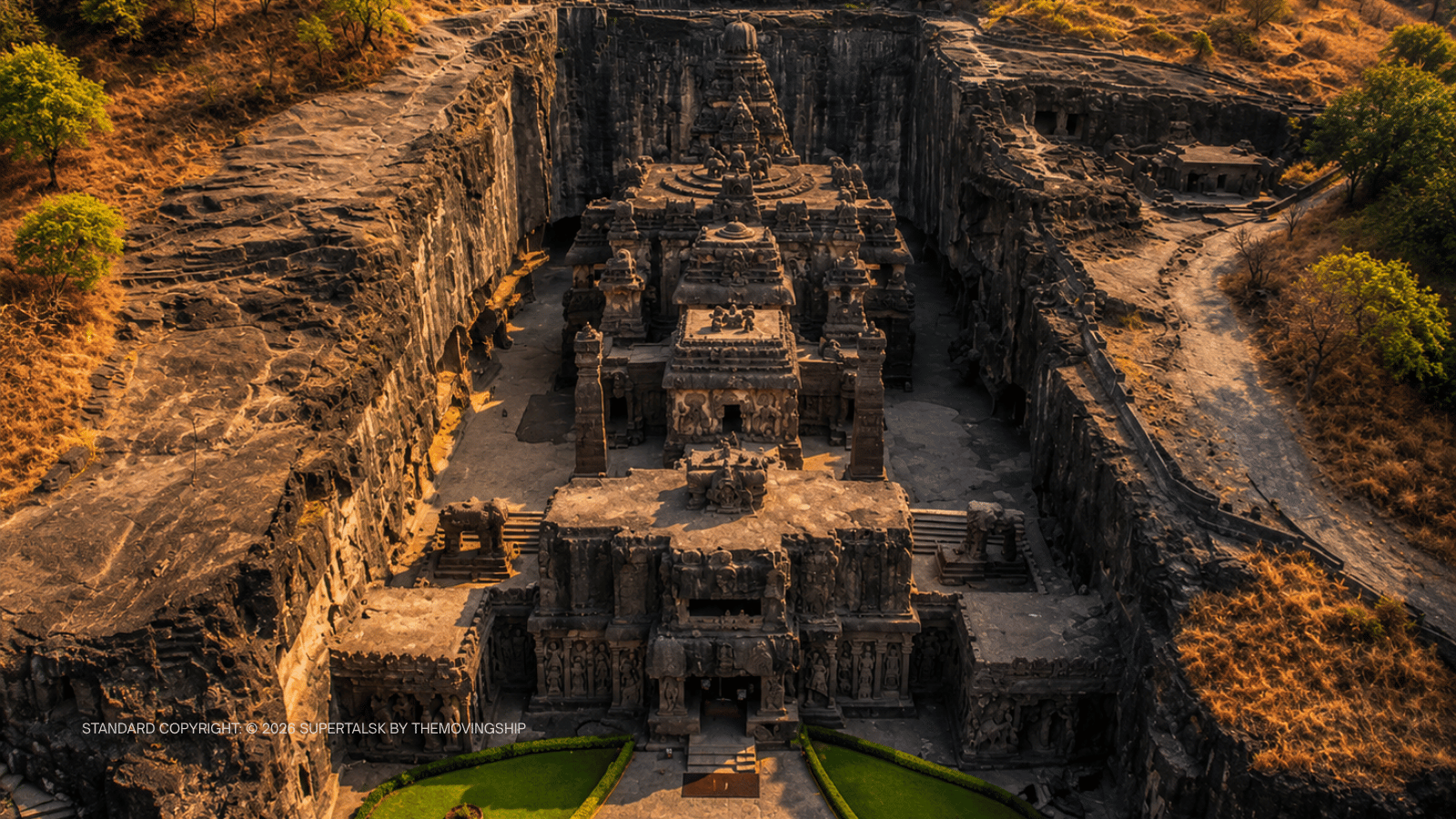
Imagine being given a mountain.
Now imagine being told to turn that mountain into a temple.
Not by stacking stones.
Not by constructing walls.
But by removing the mountain itself.
That is what makes the Kailasa Temple at Ellora so extraordinary.
Located in Maharashtra, Kailasa Temple is one of the world’s most remarkable examples of rock-cut architecture. The monument was carved out of a single massive rock, creating an enormous temple complex complete with pillars, sculptures, courtyards and intricate architectural details.
This is what Praveen Mohan finds particularly fascinating.
He describes it as an example of “negative construction.”
The idea is simple but difficult to comprehend.
Most buildings are created by adding material.
Kailasa was created by taking material away.
Stone after stone had to be removed while the final structure existed largely inside the mountain from the beginning.
One wrong calculation could permanently damage the structure.
One major mistake could not simply be corrected by bringing another stone.
You had to get the mountain right.
And somehow, ancient craftsmen produced an enormous temple filled with astonishing details.
The Real Mystery Is the Precision
The popular story surrounding Kailasa often focuses on the sheer amount of rock that had to be removed.
But the more interesting question is what happened after the excavation began.
How did the craftsmen maintain proportions?
How did they plan the sculptures?
How did they understand the structure they were creating while working from the top down?
And how did generations of craftsmen coordinate such an ambitious project?
Modern engineering has answers for many aspects of the construction, and historians generally attribute the temple to the Rashtrakuta period.
But standing inside the monument can still produce a strange feeling.
You are looking at something that was created more than a thousand years ago, yet its scale and ambition don’t feel ancient.
That’s precisely why Kailasa belongs at the top of this list.
2. Angkor Wat, Cambodia
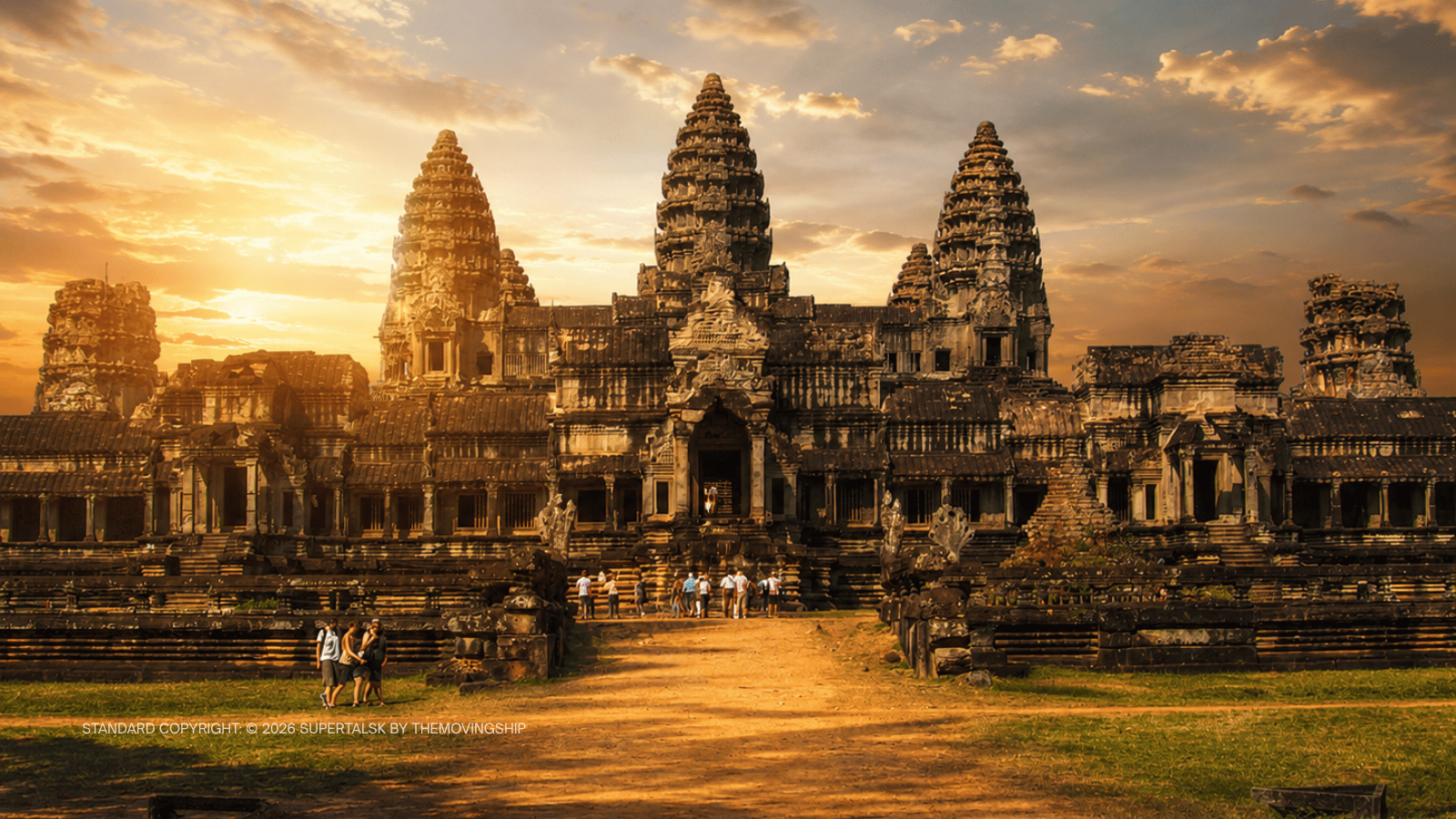
The second temple on Praveen Mohan’s list takes us far outside India.
To Cambodia.
And this is where the story gets even more interesting.
Angkor Wat is often associated with Cambodia’s Buddhist heritage today. But the monument was originally constructed as a Hindu temple dedicated to Vishnu, during the reign of King Suryavarman II in the 12th century.
That alone should make Indians curious.
Because thousands of kilometres away from modern India, one of the world’s greatest temple complexes was built around Hindu religious traditions.
The scale is difficult to describe until you see it.
Massive towers rise above the landscape.
Long galleries contain elaborate carvings.
Walls narrate scenes from Hindu mythology.
And the entire complex reflects an extraordinary understanding of symmetry, architecture and sacred design.
For Praveen, Angkor Wat represents something larger than a magnificent monument.
It is evidence of how far Indian cultural and religious influence travelled across Southeast Asia.
You Don’t Have to Leave India to Understand Angkor Wat
There is an important lesson hidden in the Angkor Wat story.
Indian history did not stop at India’s modern borders.
Indian religions, languages, art, architecture and philosophical traditions travelled across Southeast Asia for centuries.
Cambodia, Indonesia, Thailand and other regions contain monuments that preserve chapters of this shared history.
That makes Angkor Wat particularly meaningful for Indian travellers.
You aren’t simply visiting another country’s tourist attraction.
You are encountering a distant chapter of the Indian civilizational story.
3. Chennakeshava Temple, Belur
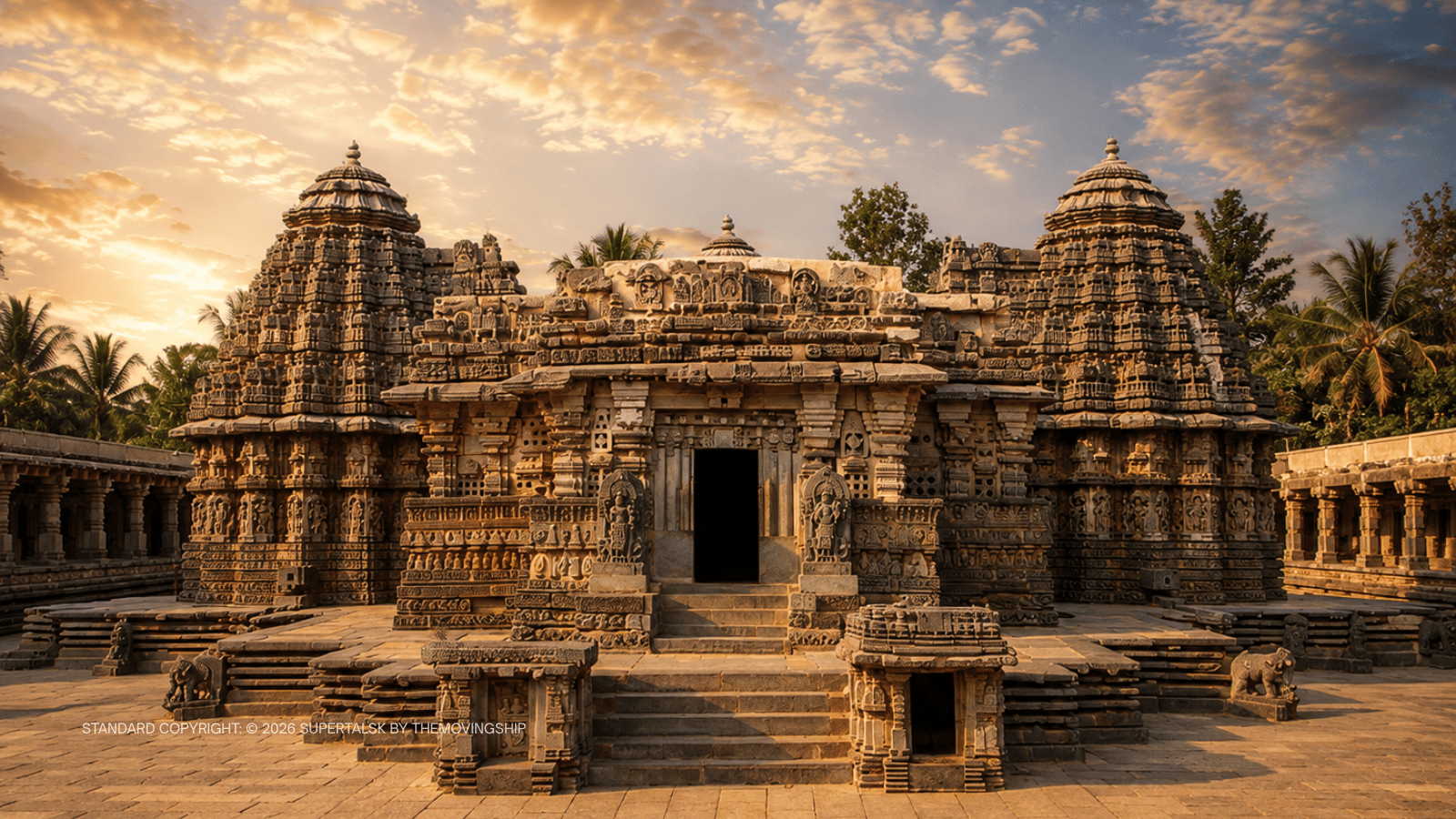
If Kailasa makes you wonder how a mountain could become a temple, the Chennakeshava Temple at Belur in Karnataka raises another question:
How did ancient craftsmen achieve this level of precision in stone?
Built during the Hoysala period, the Chennakeshava Temple is famous for its incredibly detailed sculptures and sophisticated architectural design.
The temple doesn’t feel like a simple stone structure.
Look closely at the pillars, sculptures and decorative elements and you begin to notice the extraordinary craftsmanship.
Every surface seems to have been given attention.
Every figure contains details.
Every pattern appears intentional.
Praveen Mohan has often highlighted the remarkable craftsmanship and engineering associated with Hoysala temples, including the famous pillars and their precision.
For someone interested in ancient technology, this is where a temple becomes much more than a place of worship.
It becomes an engineering case study.
When Stone Was Treated Like a Precision Material
Today, machining stone to precise dimensions is possible because we have sophisticated cutting equipment.
Ancient craftsmen didn’t have CNC machines, laser cutters or modern computer modelling.
Yet Hoysala architecture demonstrates an extraordinary command over stone.
The sculptures are not merely large.
They are intricate.
Jewellery, clothing, facial expressions, animals and mythological scenes were carved with extraordinary detail.
The result is almost paradoxical.
Stone—one of the hardest and least forgiving materials—was transformed into something that looks delicate.
That is why Chennakeshava deserves to be experienced in person.
Photographs can show you the sculpture.
They cannot fully communicate the precision.
4. Prambanan, Indonesia
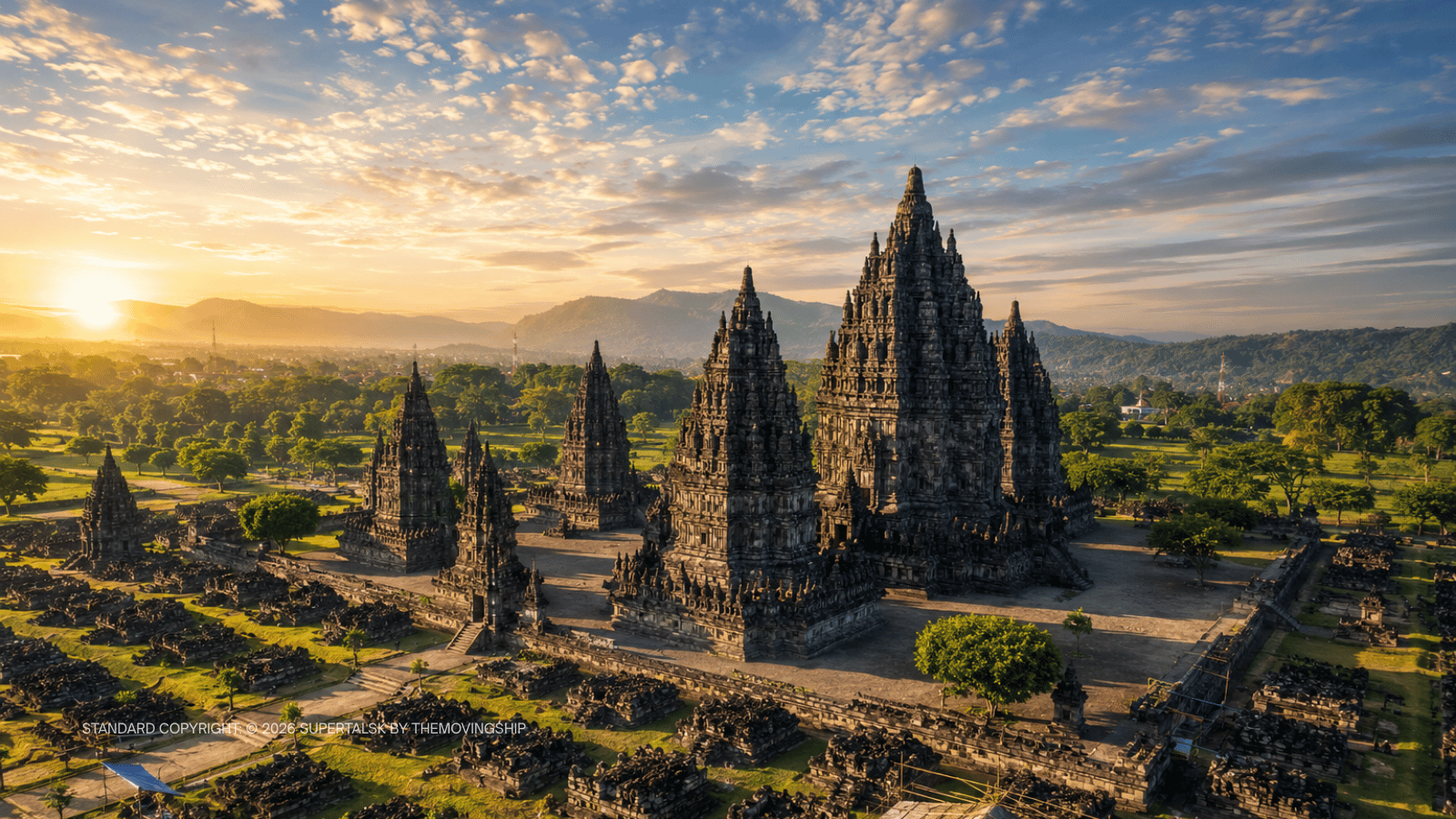
The fourth destination on the list takes us even farther east.
Indonesia.
For many Indians, Indonesia might not be the first country that comes to mind when thinking about Hindu temples.
But Prambanan changes that perception instantly.
Located in Java, Prambanan Temple is one of Southeast Asia’s most spectacular Hindu temple complexes.
The towering central temples are dedicated to major Hindu deities, including Shiva, Vishnu and Brahma.
And then there is the setting.
The tall stone structures rising dramatically against the landscape make Prambanan look almost unreal.
Praveen Mohan describes the temple as a place of almost magical beauty.
But its importance goes beyond aesthetics.
Prambanan is another reminder that Hindu civilization and its ideas travelled far beyond the Indian subcontinent.
Why Does Indonesia Have Ancient Hindu Temples?
This is perhaps the question that comes to mind while standing at Prambanan.
The answer lies in the complex history of Southeast Asia.
For centuries, Indian cultural influence reached Southeast Asia through trade, migration, diplomacy, and religious exchange.
Hinduism and Buddhism became deeply embedded in several Southeast Asian kingdoms.
The result was a fascinating cultural world where Indian philosophical traditions blended with local traditions.
Prambanan stands as one of the greatest surviving examples of that period.
For an Indian traveller, it offers a different perspective on India’s own history.
Sometimes, you understand your civilization better by seeing how other civilizations received and transformed its ideas.
5. Brihadiswara Temple, Thanjavur
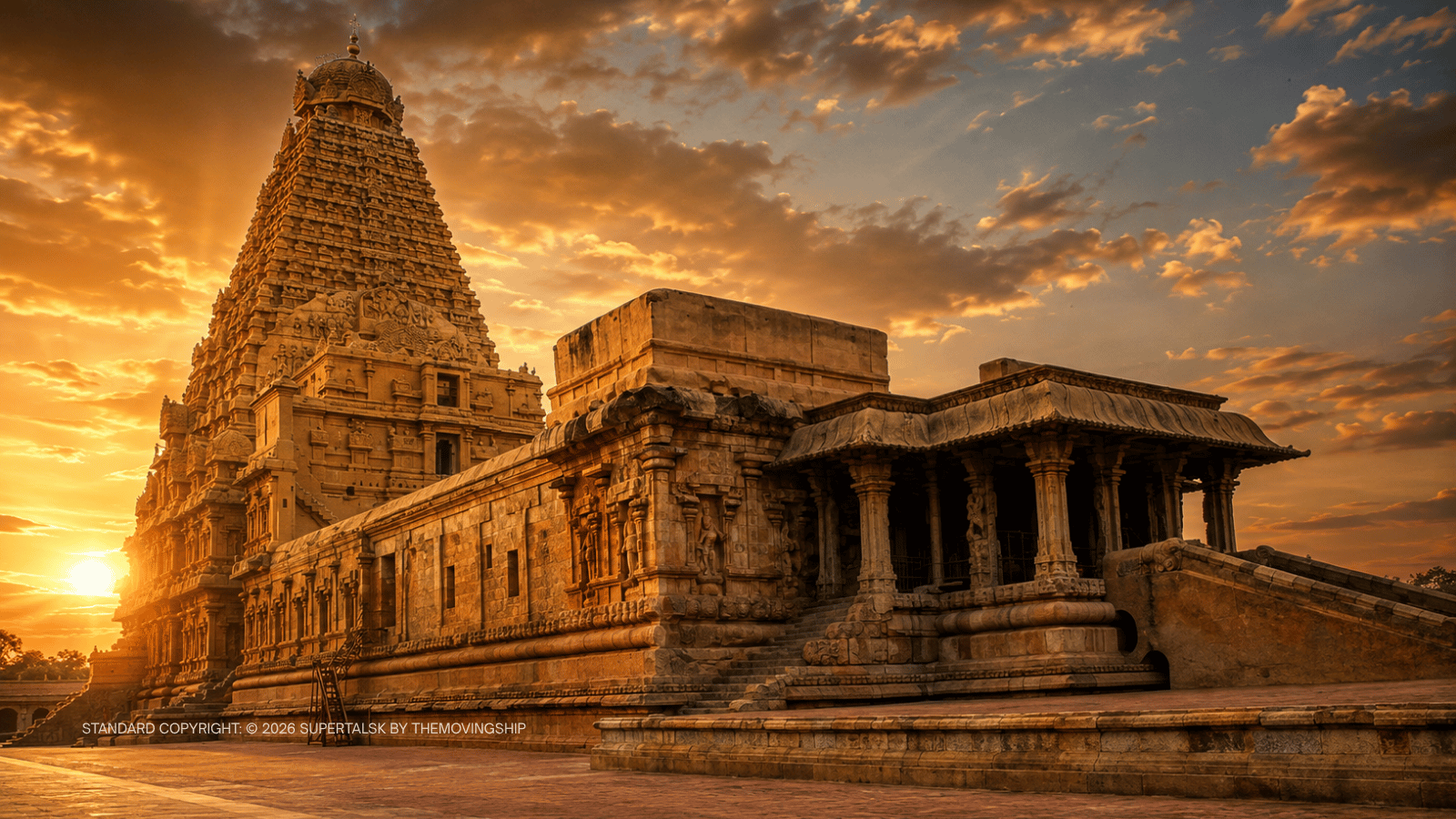
The final temple on Praveen Mohan’s list brings us back to Tamil Nadu.
And it is perhaps one of India’s greatest architectural achievements.
The Brihadiswara Temple, located in Thanjavur, was commissioned by Chola king Rajaraja Chola I and completed in the early 11th century.
The first thing that strikes visitors is scale.
The temple’s enormous vimana dominates the complex.
But the real story lies in the engineering behind it.
Moving and positioning massive stones at such heights would have required extraordinary planning, labour, and construction knowledge.
And remember when this happened.
There were no cranes powered by engines.
No modern trucks.
No steel construction equipment.
Yet the Cholas created a monumental structure that has survived for roughly a thousand years.
The Temple That Still Feels Alive After a Thousand Years
Perhaps the greatest achievement of Brihadiswara isn’t simply that it survived.
It is that it still feels alive.
The temple continues to function as a place of worship while simultaneously standing as an extraordinary historical monument.
That continuity is important.
Ancient architecture is often viewed as something frozen in museums.
Brihadiswara is different.
It remains part of living Indian culture.
You can walk through a space created by people who lived nearly a millennium ago and still witness rituals, traditions and devotion continuing within it.
That connection between the ancient and the present is something few civilizations can demonstrate so vividly.
Why Praveen Mohan’s Five Temples Are Different
At first glance, the five choices may look random.
One is in Maharashtra.
One is in Cambodia.
One is in Karnataka.
One is in Indonesia.
And one is in Tamil Nadu.
But there is a thread connecting them.
They challenge our understanding of what ancient civilizations were capable of creating.
Kailasa demonstrates the extraordinary possibilities of rock-cut architecture.
Angkor Wat shows how Hindu civilization influenced Southeast Asia.
Chennakeshava reveals extraordinary craftsmanship in stone.
Prambanan demonstrates the geographical reach of Hindu traditions.
Brihadiswara represents the engineering and cultural achievements of the Chola period.
Together, they tell a much bigger story.
You Shouldn’t Just Visit These Temples. You Should Look Closely.
There is a difference between tourism and exploration.
A tourist sees a monument.
A curious traveller asks questions.
Who built it?
Why was it built?
How did they transport the stone?
How did they carve these details?
Why does this symbol appear here?
Why is this architectural design repeated elsewhere?
How did these ideas travel across countries?
What technology did ancient craftsmen actually possess?
These questions transform a temple visit.
Suddenly, the journey isn’t about taking photographs.
It becomes about trying to understand the people who stood in the same place hundreds or thousands of years before us.
India’s Ancient Temples Are More Than Religious Monuments
One of the strongest ideas emerging from Praveen Mohan’s conversation with Raghav Sharma is that India’s temples should not be viewed only through a religious lens.
They can also be studied as records of civilization.
They preserve sculpture.
Architecture.
Mathematics.
Engineering.
Astronomy.
Mythology.
Social history.
Art.
And technological knowledge.
Every pillar can contain a story.
Every carving can reveal something about the society that created it.
Every architectural decision can raise another question.
That is why these temples remain relevant even to people who are interested in history, engineering, or archaeology rather than religion.
The Bigger Question: What Have We Forgotten?
Perhaps that is the real reason to visit these places.
Not because every mystery has an extraordinary explanation.
Not because every ancient carving proves an ancient technology we cannot explain.
And certainly not because every theory about lost civilizations is automatically true.
But because these monuments remind us of something modern life can make us forget:
Our ancestors were capable of extraordinary things.
They designed enormous structures without computers.
They moved and shaped massive quantities of stone.
They developed sophisticated artistic traditions.
They built temples that survived wars, changing kingdoms and centuries of environmental exposure.
And they left behind monuments that still make us stop and stare.
Five Temples. One Civilizational Journey.
If you had to choose only five ancient temples to visit in your lifetime, Praveen Mohan’s list offers an unusual journey.
Start at Kailasa Temple and witness a mountain transformed into architecture.
Travel to Angkor Wat and discover how Hindu traditions travelled across Southeast Asia.
Stand before the intricate carvings of Chennakeshava Temple and appreciate the mastery of Hoysala craftsmen.
Visit Prambanan and see another remarkable expression of Hindu architecture thousands of kilometres from India.
Finally, experience the grandeur of Brihadiswara Temple and the architectural ambition of the Chola dynasty.
Five temples.
Five different stories.
One enormous civilizational legacy.
And perhaps the best part?
You don’t need to believe every mystery surrounding these monuments to appreciate them.
You simply need to look closely.
Because sometimes, the real mystery isn’t whether ancient India was capable of extraordinary things.
It’s how much of what it knew we are still trying to understand.
Watch the Full Conversation on Supertalks
The five temples discussed in this article were part of a fascinating conversation between Raghav Sharma and Praveen Mohan on the Supertalks Podcast, covering ancient Indian architecture, UFO theories, Vimanas, lost knowledge, temple engineering, and the mysteries surrounding ancient civilizations.
Watch the complete episode on Supertalks to hear Praveen Mohan explain these ideas in his own words and explore the questions that continue to surround some of the world’s most remarkable ancient monuments.